

The nation’s capital is home to a stunning cathedral, a hidden monastery and many more spaces where spirituality and culture collide.
Washington, DC’s religious legacy is as diverse as the city itself, expressed through places of worship, reflection and cultural expression, from monuments and memorials to community centers and museums that blend centuries of history, architecture, artistry and faith.
Whether you meditate in the Bishop's Garden or participate in community conversations at Sixth & I, DC's sacred places invite visitors to slow down, connect and engage with spirituality during their visit.
Visitors are encouraged to be mindful of each site’s customs, services and guidelines.
Next: check out our guide to wellness-inspired travel in DC or get in on historic celebrations for America's 250th birthday throughout 2026.
Sacred Spaces
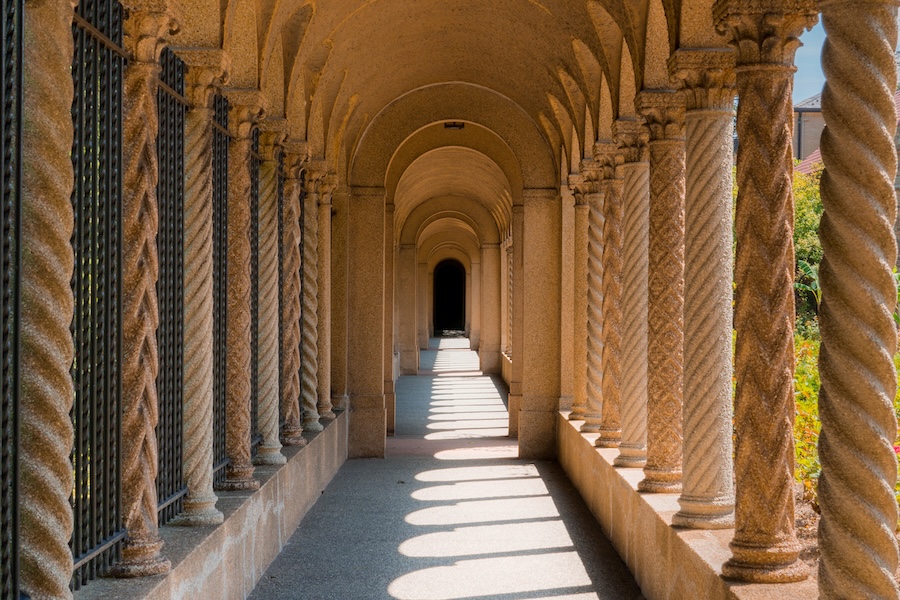
Franciscan Monastery and Memorial Church of the Holy Land
Dedicated in 1898, this national Roman Catholic shrine includes a beautiful monastery church and picturesque, century-old gardens. The Monastery is meant to serve as a "Little Jerusalem” in the U.S. – a pilgrimage site and home to a Holy Land Franciscan community.
Visitors of all faiths are welcome. Donations are appreciated.
What to experience:
- Free tours are available on select days of the week, covering the church itself and the full-size replicas of the Mount Calvary and Holy Sepulchre shrines in Jerusalem. Reservations are encouraged generally and required for groups of 6 or more.
- Stroll among the serene, 42-acre gardens, home to over a thousand roses, plus breathtaking native trees and plants. They are open to the public daily, with tours available on Saturdays, April through Sept.
- Catch programming like “Music at the Monastery,” a free, monthly concert series.
The United House of Prayer for All People
Founded in 1919 in the Christian and Apostolic faiths, this church is colloquially called “God’s White House.”
What to experience:
- Daily worship services
- Order soul food from the no-frills, basement-level eatery Saint's Paradise Cafeteria
- Worshippers from across the country gather for its annual parade the Saturday before Memorial Day, which involves marching bands and honors the church’s founding bishops
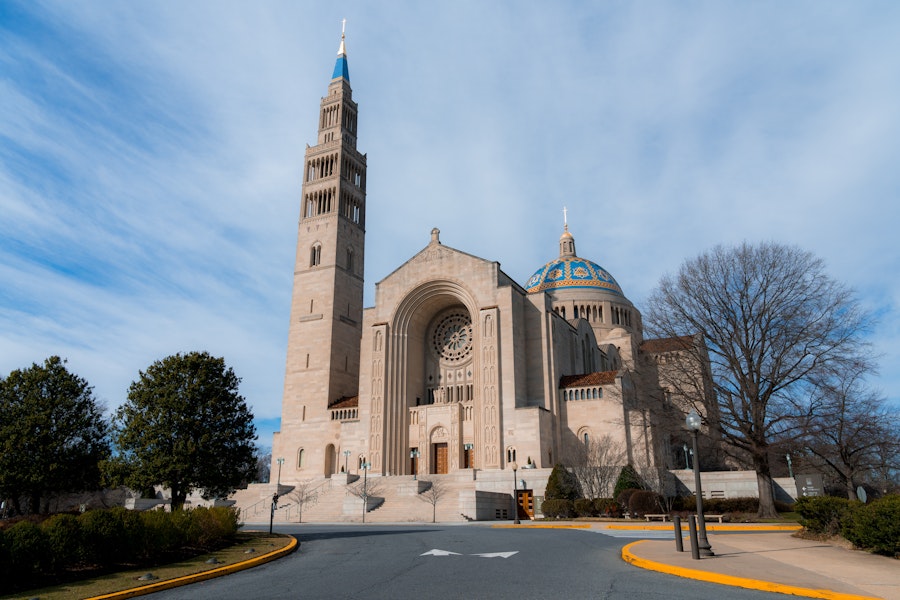
The Basilica of the National Shrine of the Immaculate Conception
The tallest habitable building in the District also serves as the largest Roman Catholic church in North America, which held its first mass in 1924. The Basilica is an architectural and artistic marvel, home to Romanesque-Byzantine style sculptures, stained glass windows, mosaics and marble work.
What to experience:
- Daily masses, frequent pilgrimages and a calendar of events including special services and concerts
- Guided tours include stops at the Crypt-level chapels (there are over 80 in total) and the Great Upper Church, delving into the history, architecture and artwork of the Shrine, including the world’s largest collection of ecclesiastical art
- Visit Mary’s Garden or Rosemary Walk and Garden
- Stop by the cafeteria or Shrine shops (bookstore and gift shop)
Islamic Center of DC
Built in 1949, this stunning mosque along Embassy Row was created to promote a better understanding of Islam in the United States, welcoming all to come and worship. It was designed by Italian architect Mario Rossi, who built many mosques in Egypt.
President Dwight D. Eisenhower attended and spoke at the dedication ceremony in 1957, remarking that the mosque embodies religious freedom in the U.S. After 9/11, President Bush visited the site to affirm solidarity with the American Muslim community.
What to experience:
- The mosque opens 30 minutes before the call to fajr (dawn) prayer and remains open until one hour after the isha (final) prayer
- Because of all these nations involved in its creation, the mosque is surrounded by the flags of many Islamic countries
- Admire the architectural marvels that make up this site:
- A bronze chandelier donated by Egypt
- Qur’anic verses (written by specialists) that adorn the walls and ceilings
- Tiles from Turkey, installed by Turkish professionals
- Persian rugs from Iran at the center of the mosque
- Offerings also include language and religion classes
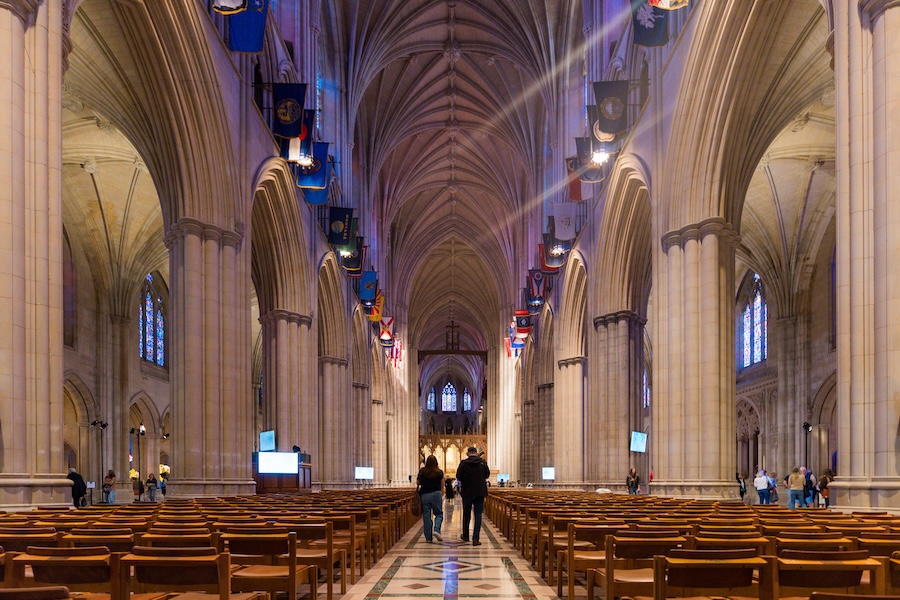
Washington National Cathedral
After an 83-year construction process, President George H.W. Bush oversaw the placing of the final stone in 1990. Though rooted in Protestant Episcopal tradition, the community welcomes visitors of all faiths.
Read our full guide to visiting the Cathedral.
What to experience:
- Public programming includes everything from panels, yoga and stunning art installations of light displays cast onto the ceiling, plus beloved events like Flower Mart
- Tours:
- Angels and Monsters Tower Climb – for an up-close look at the gargoyles and a 360-degree view from the northwest tower
- Bell Tower Climb – to see 1) the upper stained-glass windows including three that compare the three branches of American government to Bible stories, 2) champagne bottles that were left on New Years from the crafts people that built the Cathedral and 3) the bell tower
- The Space Window contains a real moon rock given to the Cathedral by astronauts Michael Collins, Neil Armstrong and Edwin “Buzz” Aldrin from the Apollo 11 mission on its 5th anniversary
- President Woodrow Wilson is buried here, making it the only cathedral in the country to house a presidential tomb
- Be sure to look for the hidden Darth Vader grotesque installed in 1986 in northwest tower
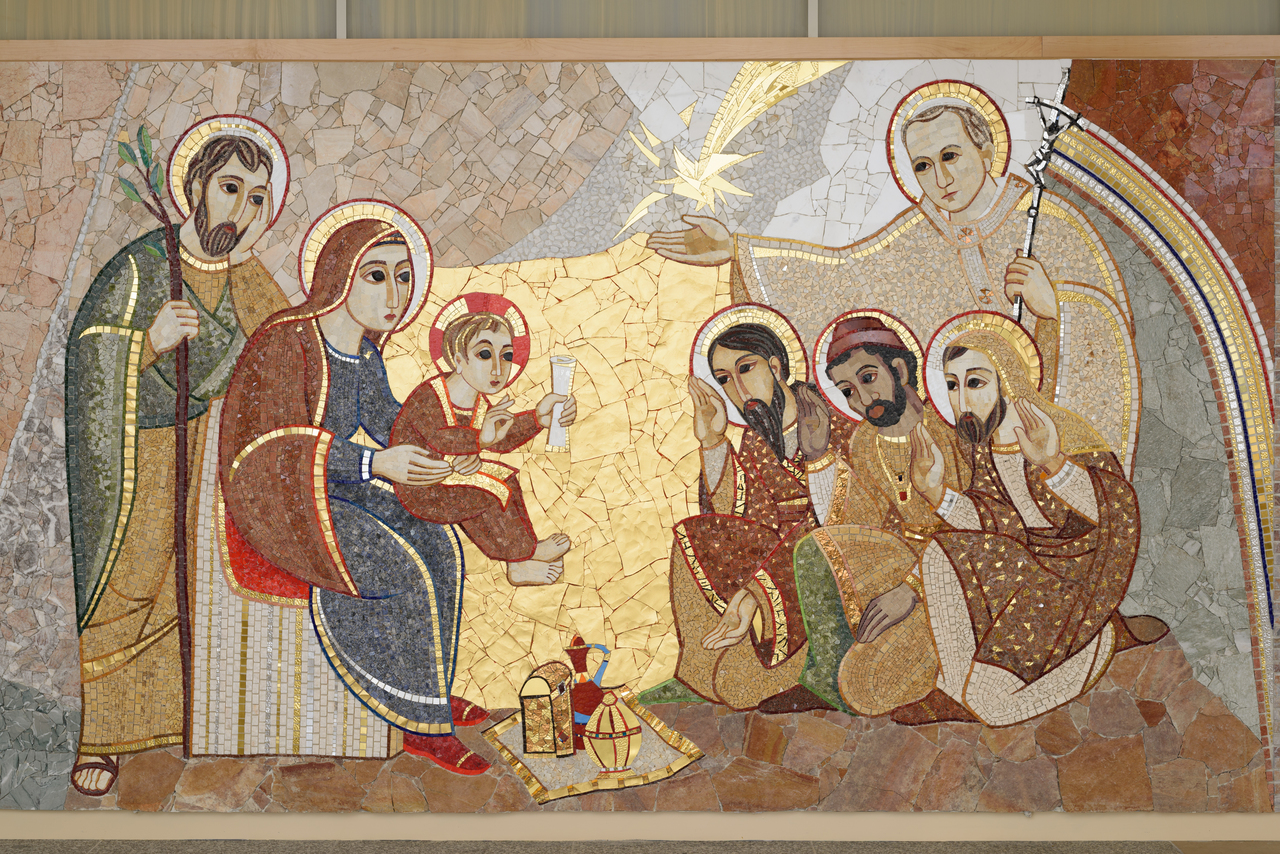
The Saint John Paul II National Shrine
Roman Catholic site honors the life and legacy of Pope John Paul II, elected in 1978 and recognized as a global spiritual leader. It was designated a national shrine by the United States Conference of Catholic Bishops in 2014 and is a popular pilgrimage destination, free and open to the public 365 days a year.
What to experience:
- Features a first-class relic of St. John Paul II available for veneration
- Permanent exhibits feature videos and interactive elements, highlighting key moments in his life and his worldwide impact
- In addition to daily services, the calendar includes cultural programs and religious celebrations connected to his papacy
- Provides a reflective space inspired by John Paul II’s vision for cultural renewal and spiritual encounter
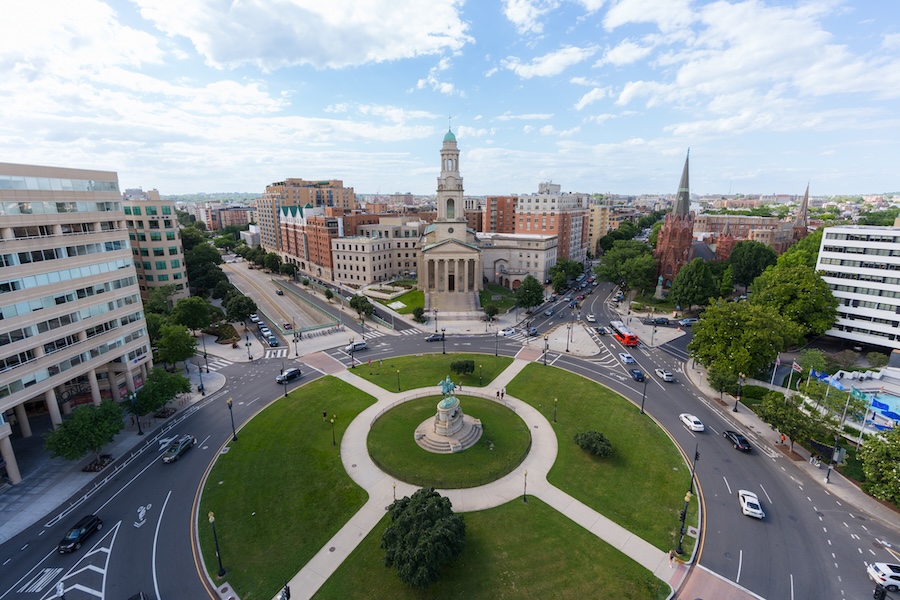
National City Christian Church
The Christian church, located on Thomas Circle, is open to all in search of spiritual home and puts emphasis on music as a form of spiritual expression. The building was designed in 1930 by John Russell Pope, who would later design the Jefferson Memorial and National Gallery of Art’s West Building. The inaugural prayer service for President Ronald Reagan was held here.
What to experience:
- Catch a free Friday midday performances (Sept. through Dec. and Feb. through June) with a 7,000-pipe organ
- Look for the two stained-glass windows that feature presidents affiliated with the church: James Garfield and Lyndon B. Johnson
- Get an unparalleled view of this iconic part of the skyline by visiting Hotel Zena’s rooftop
Cathedral of Saint Matthew
This Roman Catholic church held its first public mass in 1895. It was the site of President John F. Kennedy’s funeral in 1963 and was visited by Pope Saint John Paul II, Pope Benedict and Pope Francis.
What to experience:
- Admire the Renaissance revival architecture
- Spanish language services and gatherings are offered several days a week
- The annual “Red Mass" is held the day before the U.S. Supreme Court opens its term, ceremonially invoking blessings for those in the legal profession responsible for administering justice
Museum Programming & Cultural Centers
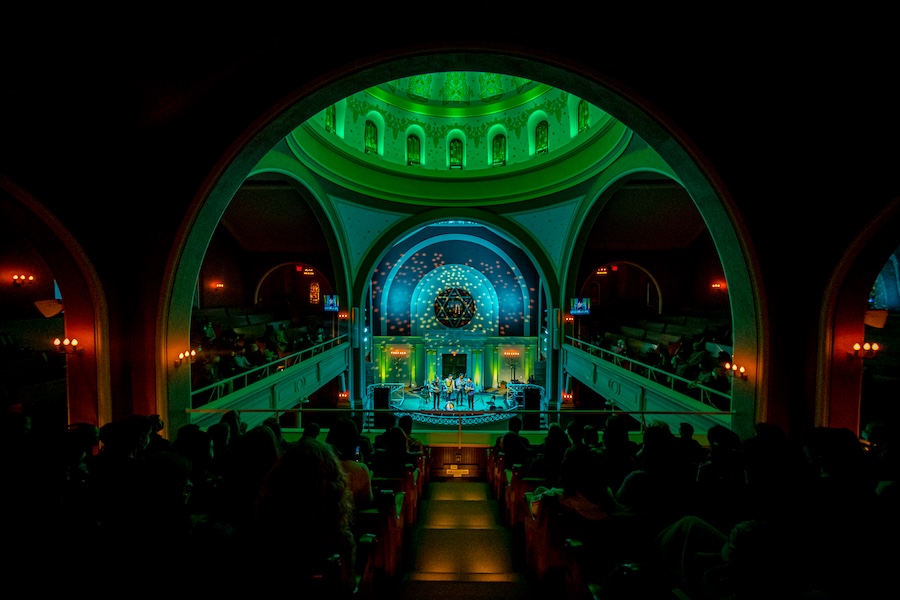
Sixth & I
Named for its location, this was the first Jewish congregation in DC (1908). The now-revitalized synagogue is home to a vibrant and multi-faceted community – multi-denominational and non-membership – exploring the intersection of culture and spirituality. In addition to Jewish cultural events, visitors can engage with Jewish culture and values through arts, entertainment, thought-provoking Q&As and other programming.
What to experience:
- The calendar of events includes everything from shabbat dinners and Hebrew literacy to comedians and musicians
- Particularly popular are its community conversations and big-name author talks – for decades, every visiting speaker has signed their name on a wall in the building
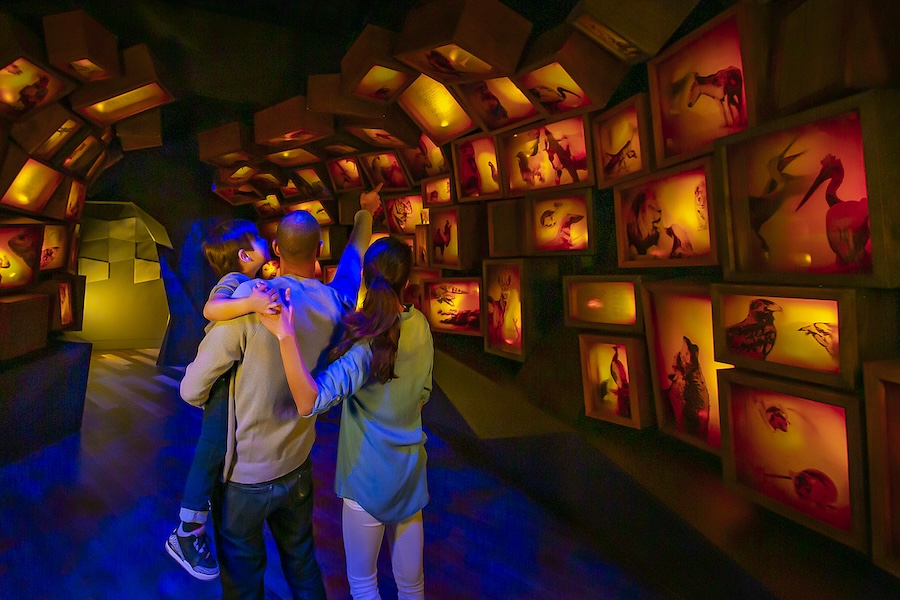
Museum of the Bible
The modern museum, founded in 2017 by Evangelical Christians, presents a non-denominational perspective on the story of the Bible and its impact on global history and culture. It combines historic objects with interactive technology and contemporary perspectives to provide a dynamic, thought-provoking and kid-friendly experience.
What to experience:
- Houses a collection of over 40,000+ objects related to the Bible’s history, including exceptional artifacts like:
- The oldest known Christian mosaic dating back to the third century from northern Israel
- The Wiedmann Bible, the world’s longest illustrated Bible, which stretches just under a mile long if stretched out
- The Afghan Liturgical Quire, the oldest Hebrew book ever discovered
- Includes virtual reality tours that transport visitors to historic biblical landscapes
National Museums of African American History and Culture
This popular Smithsonian Museum has welcomed visitors since 2016. The Center for the Study of African American Religious Life seeks to acknowledge and explore the role of religion in the U.S., particularly in the realms of academic research and cultural institutions, with an emphasis on exploring the Black religious experience through the complexity of suffering and trauma in America.
Visitors can catch rotating and ongoing exhibitions, plus public programming like talks, conferences, film screenings, panel discussions and more.
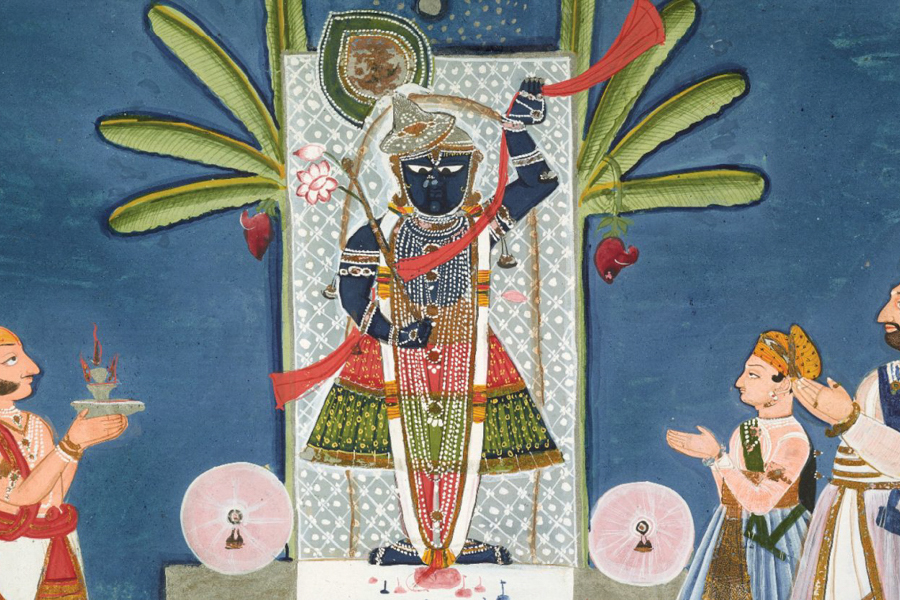
National Museum of Asian Art
Founded to be a “forum of cultural exchange,” this stunning museum curates special exhibits as a part of its Arts of Devotion initiative, meant to encourage conversations and education about the religious traditions of Hinduism, Buddhism and Islam through special collections of art and artifacts.
Events include celebrations, cultural events and screenings, as well as meditation and mindfulness workshops.
Capital Jewish Museum
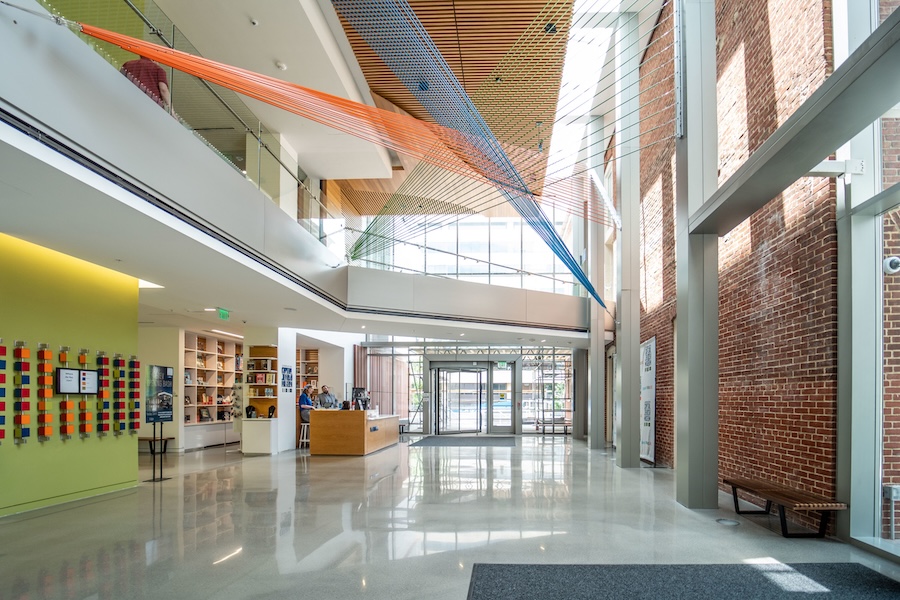
Established in 2023, the Lillian and Albert Small Capital Jewish Museum is housed inside the historic 1876 building of Adas Israel Congregation, the oldest surviving synagogue building in Washington, DC. The free museum invites visitors to reflect on the Jewish experience in the region, past and present, with the building itself often described as the museum’s “largest artifact.”
What to experience:
- Programming from film screenings and community conversations to kid-focused story times
- Guided tours of ongoing and special exhibition tours are available, with public options starting at $5
- Rotating exhibitions covering everything from deli culture to the Hollywood blacklist of the 1940s
- Can’t-miss artifacts include:
- Menorah made by Holocaust survivor Coppersmith Erwin Thieberger
- Items connected to Ruth Bader Ginsburg
National Museum of American History
Through programming and exhibits, the Center for the Understanding of Religion in American History observes themes of religious diversity, freedom and growth from the colonial era through the 1840s, unpacking the complex interaction of diversity, devotion, creativity and critique that has marked American attitudes toward religion.
United States Holocaust Memorial Museum
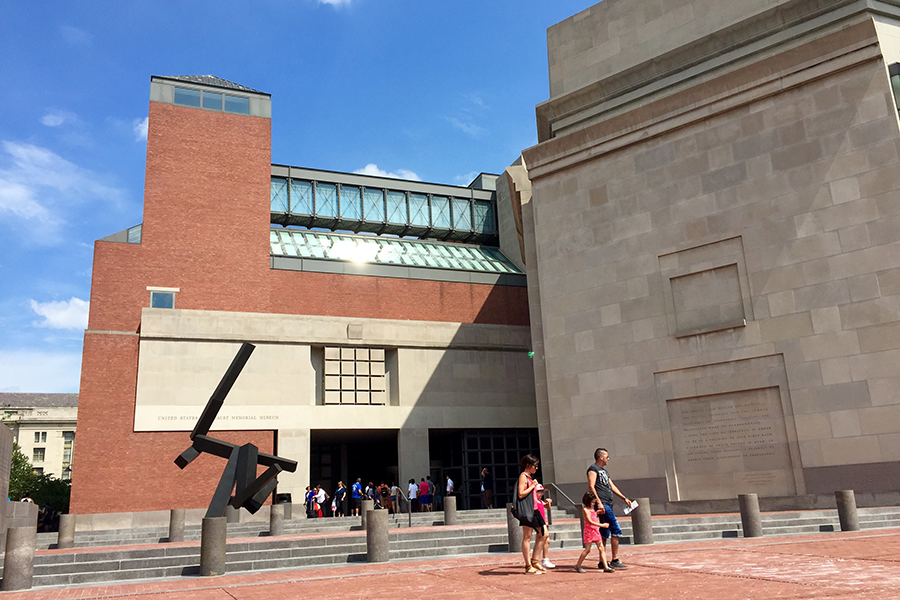
Chartered by a unanimous act of the U.S. Congress in 1980 and dedicated in 1993 on the National Mall, this free museum serves as “a living memorial whose mission is to inspire visitors to confront antisemitism and hatred, prevent genocide, and promote human dignity.”
What to experience:
- Passes are required to visit the permanent exhibition
- An unforgettable experience is the museum’s monthly, hour-long Conversations with a Holocaust Survivor
Library of Congress
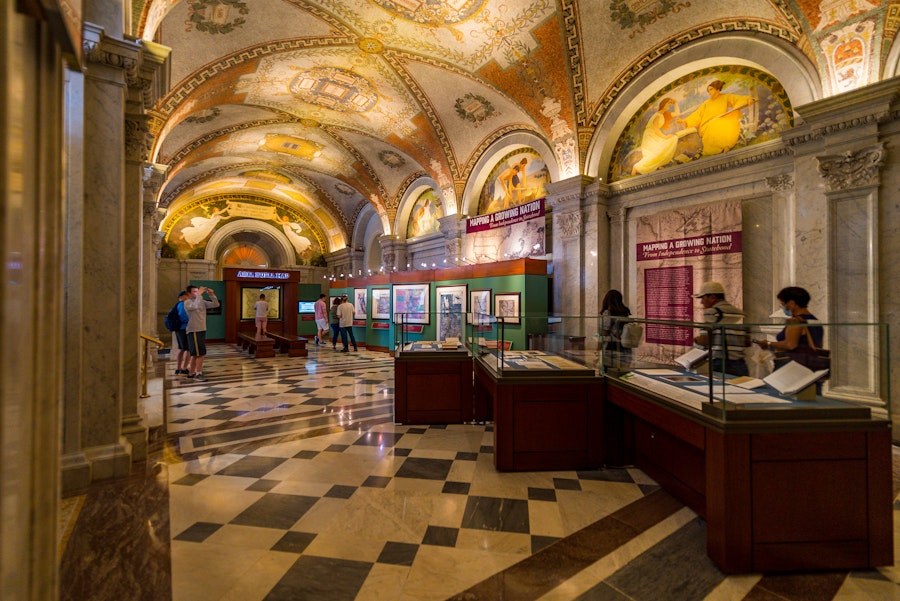
It’s no wonder that the world’s largest library contains some of the world’s most fascinating religious texts.
What to experience:
- Ongoing exhibitions, occasional film series
- Temporary and ongoing displays of religious texts
- A complete copy of the Gutenberg Bible
- The Book of Mormon on display in the Rare Book and Special Collections Reading Room in the Jefferson Building
- First printed Bible in America (1663)
- Mini Bible Collection – 50 books less than 10cm in English, Hebrew, German, Dutch and Japanese
- Giant Bible of Mainz (~1452)
Partner Content